
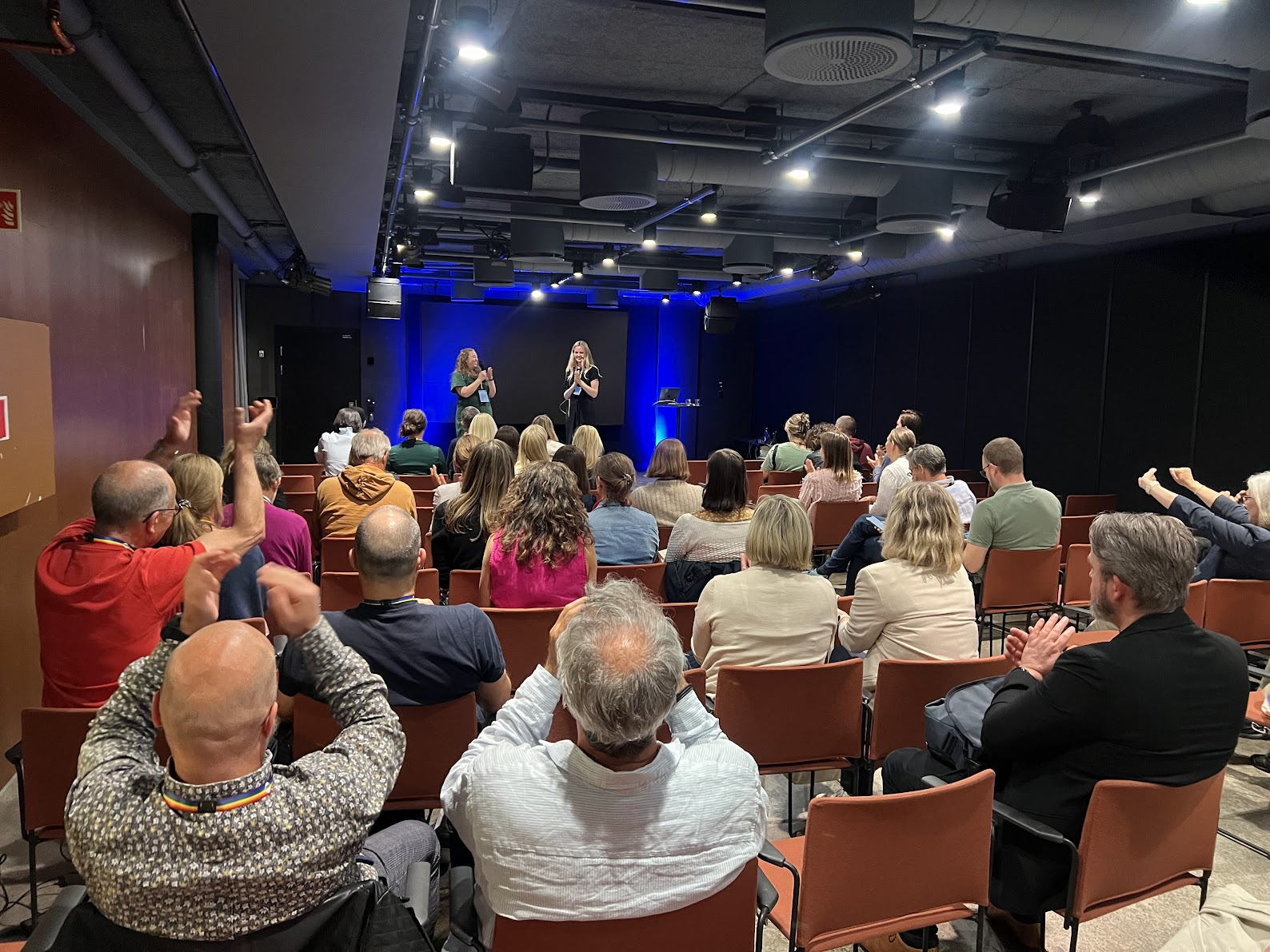
On a sunny and rainy Norwegian summer’s day, I woke up excited and early to host our first ever mini conference for 80 Product Managers in NAV. Product Manager Day 2024 was finally happening! Working within budget restrictions and high ambitions to create an authentic conference experience, my colleagues Sigrun, Ingrid og Yvonne and I had spent three previous months designing the program together with the participants, on top of other tasks. Our aim was to boost the strong product managment community within our organization and utilize the competence and engagement that was already present. At the end of the day, the participants rated the experience a total score of 4.74 out of 5 😍. We couldn’t be more proud of the magic we created together with our PM community!
Beside our typical main ingredients for organizing events (structure and planning, facilitation experience, collaboration, and fun 🥳), this post elaborates on five key lessons.
Lesson #1: Fewer organizers are more efficient 🚀
After the four organizers had agreed on goals and budget for the event, Sigrun and I had the opportunity to put in some extra effort, and thus took lead of the process. Collaborating in a well functioning pair is super efficient (as I have written about before), and Sigrun and I knew from previous experience we made a great team. A pro-tip when you are co-facilitating or co-organizing is to make sure you and your partner align on ambitions and quality, and support each other.
Now and then we checked in with our sponsor and the other organizers to get feedback and help. When the big day was approaching, we were all in sync and could easily split the rest of the tasks between us to be even more efficient.
For planning tools, we used Trello, Slack, and Mural. In the beginning, the digital whiteboard functioned as a common planning tool, but as Sigrun and I started digging deeper in to details, the board soon became too messy for anyone else to keep track of. We compensated with regularly updating and involving the rest of the organizers on Slack and in weekly meetings.
One of the risks we took was the possibility of one of us getting sick or absent. We barely managed to organize everything on time, and it’s a vulnerability we need to consider for our next big event.
Lesson #2: Details can make the difference, but avoid rabbit holes 🐇
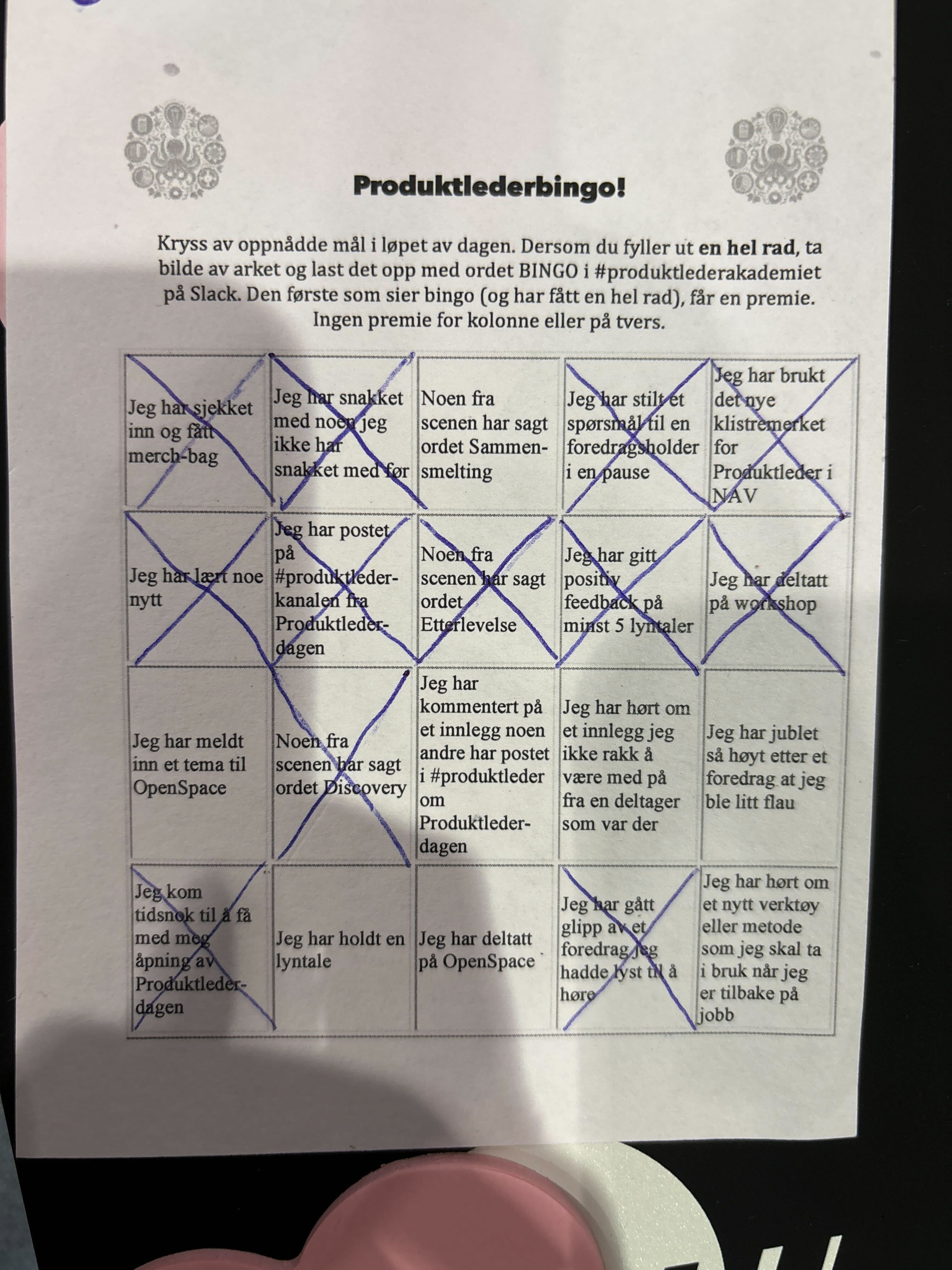
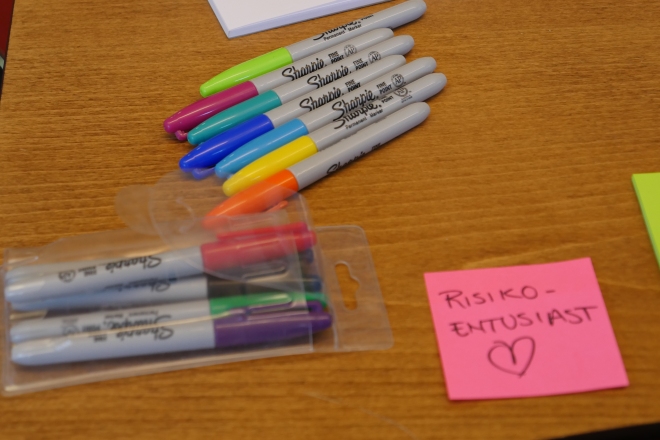
Aiming to create the same feeling you get at an actual conference, Sigrun and I sometimes went a bit over board with the nice-to-have details. We AI generated our own playlist, our own logo 🐙, created stickers, a bingo competition and filled 80 goodie bags with branded merch for each participant. Working late, having too much fun playing with the details, we sometimes had to ask ourselves this question to get our priorities straight:
If we had to organize the event tomorrow, what would we be working on today?

Lesson #3: Create a feeling of abundance and FOMO 🤹♀️
The most import ingredient to mimic that authentic conference feeling was for us to pack the program with parallel tracks, to create that frustrating feeling you get when you are forced to miss lots of interesting talks. That way, you have more to discuss during breaks and a stronger incentive to ask questions, network and connect. It also helped shift and rebuild the energy between each session, because it was always a new group attending.

Lesson #4: Invest in your own talent 👨🎤
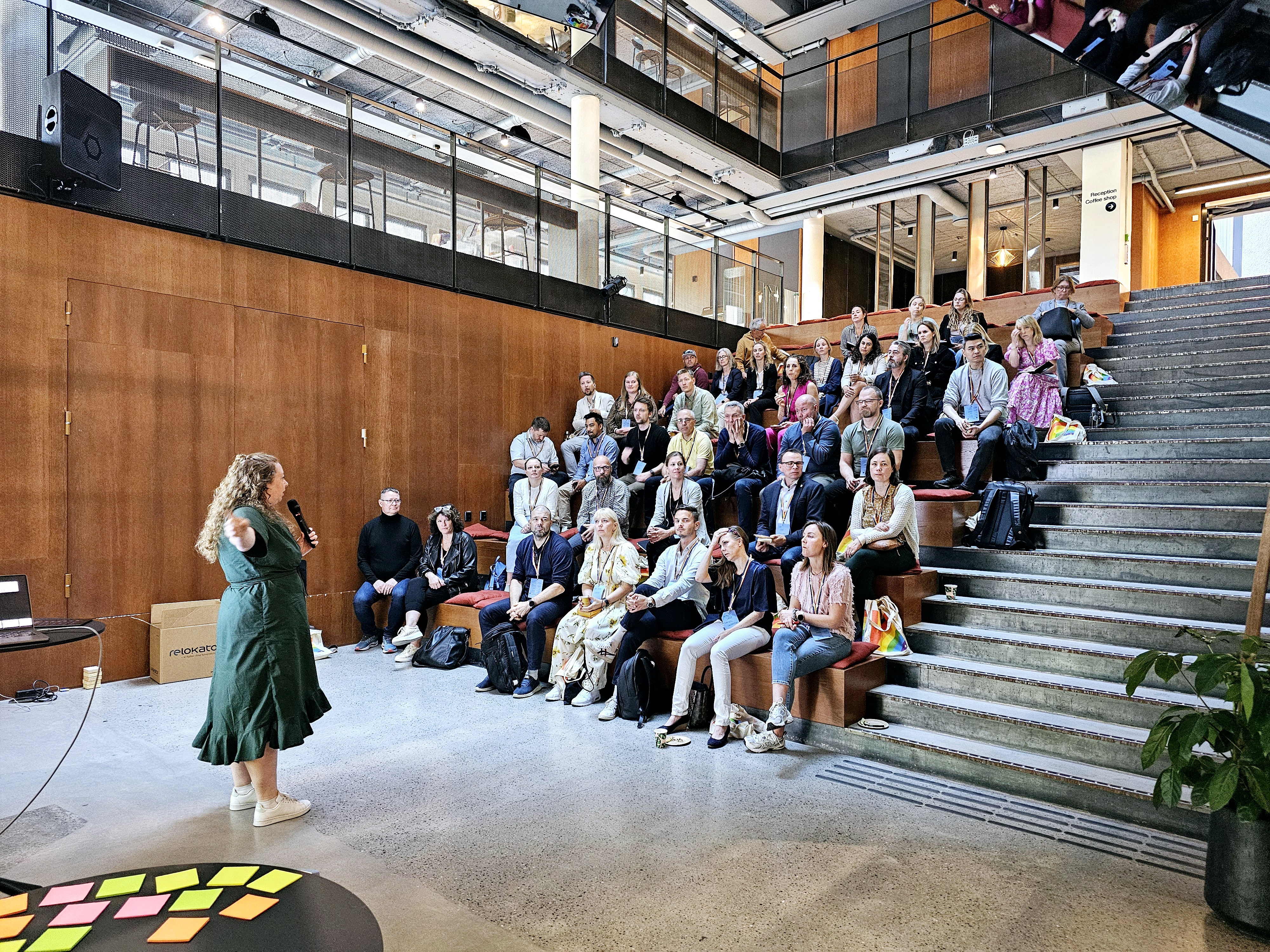
To kickstart the day and bring in some inspiration from outside our company domain, we invited two fantastic keynote speakers from Aidn, Kim and Marius. Having two impressive product people share their honest experience with us lifted the quality of the event. At the same time, we were conscious about our own talent sitting in the audience. When we first sent out the invitation, we invited the participants to contribute, and 16 product managers immediately raised to the challenge. That allowed us to have 16 lightening talks in the parallel tracks.
Our top priority was to be of service to the product managers that were contributing their wisdom, effort, and heart in their lightening talks, to make sure they felt confident when they entered the stage. Sigrun and I offered mentoring, dry run sessions and feedback. At the time of the event, the rest of the audience were instructed to give positive feedback to our lightening speakers, to train our ability to identify each other’s strengths, and to offer a gift of appreciation to our talented pool of speakers. According to positive psychology, focusing on our strengths will allow us to perform better than focusing on our weaknesses.

Lesson #5: Make the rules of the game clear from the start 💎
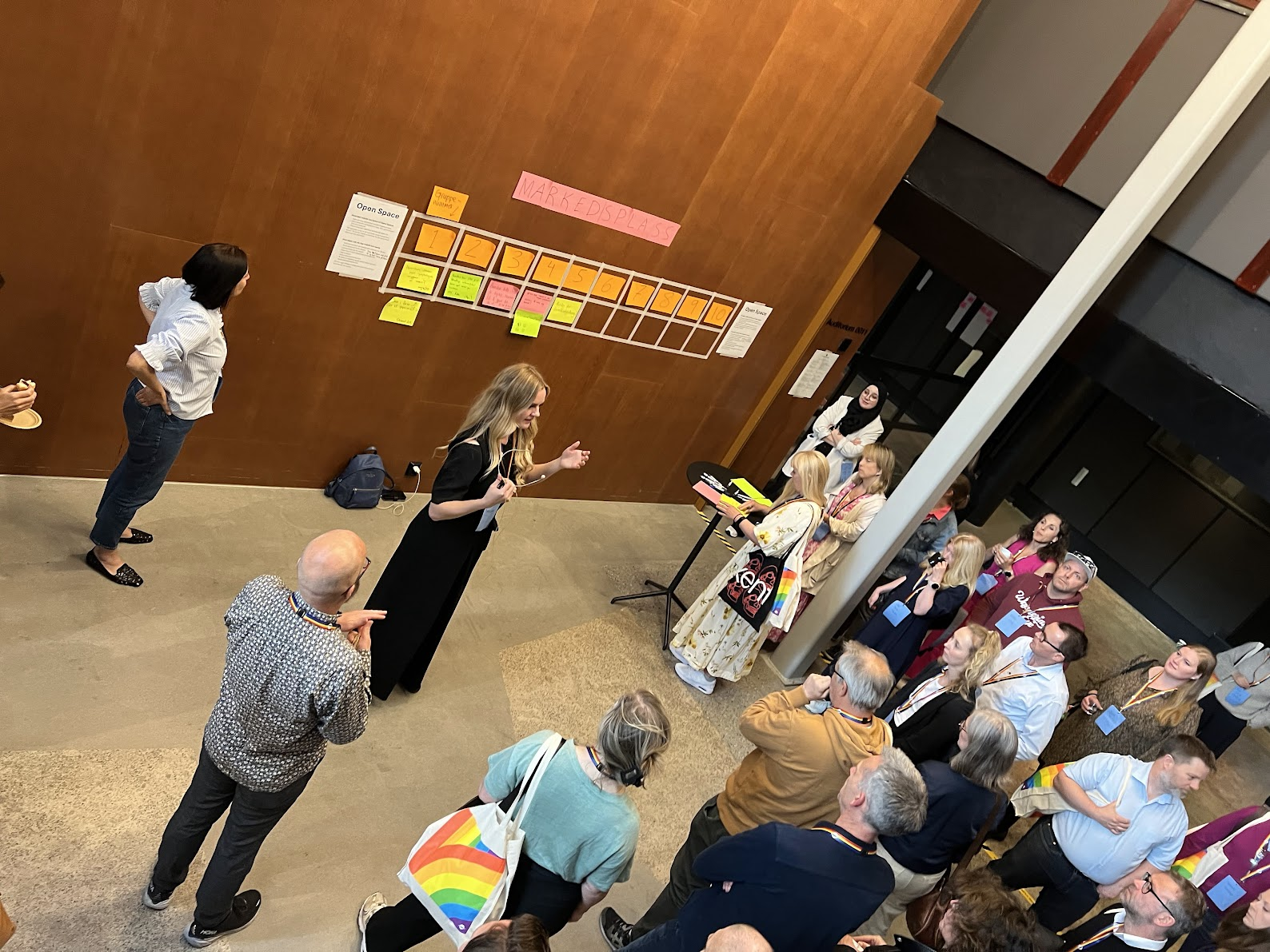
One of my biggest learning and reminder was to not underestimate the need for explaining rules of new concepts. I have run several Open Space sessions in my organization, also with larger groups, but not with this community. Many had never attended an Open Space before, and I assumed the rules were clearer than they were. Next time, I will share some information beforehand, and explain from the beginning what it means to propose a topic, to make it safe from the start to engage. Once we got going, the participants loved it, and the group discussions were fun and energetic. With the proper framing and introduction, I highly recommend Open Space as a concept!
Have you organized big events, and what’s your learning experience? What do you take away from our learnings? Where do you disagree? In what other context do you find these and other learnings applicable?


 context is queen